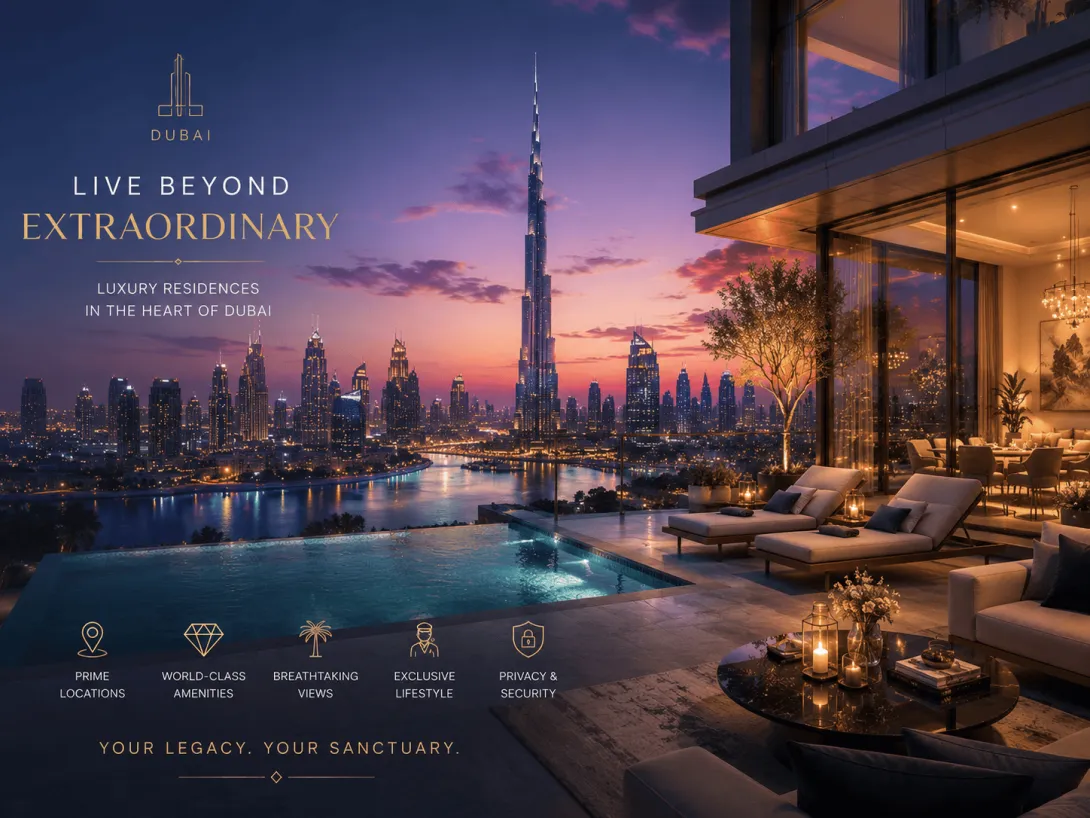
A volatile geopolitical backdrop tested Dubai’s real estate market in early 2026, but the sector responded with surprising resilience. Despite a sharp, sentiment-driven selloff in real estate equities, residential property prices declined only modestly and quickly stabilized. Transaction volumes remained substantial, and investor activity rebounded as ceasefire signals emerged. Structural drivers—including population growth, international capital inflows, and policy support—continue to anchor demand. With prices still trending upward year-on-year and off-plan sales dominating activity, Dubai’s housing market appears less speculative and more fundamentally grounded, positioning it for sustained growth barring renewed geopolitical escalation.
Resilience in the Face of Geopolitical Shock
Dubai’s residential real estate market entered 2026 under the shadow of regional conflict, yet its performance defied conventional expectations. During the peak of tensions between February and April, residential prices corrected by a contained 4–7%, a modest adjustment given the scale of geopolitical uncertainty. In stark contrast, equity markets reflected far deeper anxiety. The DFM Real Estate Index plunged 34% at its lowest point, marking the largest divergence between asset pricing and investor sentiment recorded in any Dubai crisis cycle. This gap underscores a critical distinction: while capital markets reacted sharply to uncertainty, underlying property values remained anchored by fundamentals rather than speculation. By mid-year, average residential prices reached approximately AED 1,900 per square foot, compared to AED 1,800 per square foot in H1 2025, representing a steady 6% year-on-year increase. This upward trajectory reinforces the notion that the correction was temporary and sentiment-driven, rather than indicative of structural weakness.
Transaction Volumes Signal Underlying Strength
Market activity provides a clearer lens into investor conviction. Dubai recorded approximately AED 225.7 billion in residential transactions in H1 2026, a robust figure given the external shocks during the period. While this represents a 16% decline compared to the exceptionally strong 2025 levels, it still marks a 15% increase relative to 2024, suggesting that the market is consolidating rather than contracting. A notable feature of the current cycle is the dominance of off-plan transactions, which accounted for 70–77% of total activity. This indicates that investors are not merely reacting to short-term price movements but are actively positioning for long-term capital appreciation. Weekly transaction volumes during the recovery phase surged to nearly AED 10 billion, reflecting renewed confidence as geopolitical tensions eased. Investors, it appears, interpreted the downturn as a temporary dislocation rather than a fundamental shift in market dynamics.
Demand Recovery and Investor Psychology
The trajectory of buyer inquiries mirrors the broader market pattern. Demand softened immediately following the escalation of conflict but rebounded swiftly once diplomatic signals improved. This behavior highlights a key characteristic of Dubai’s property market: its sensitivity to sentiment in the short term, coupled with a strong reversion to fundamentals over the medium term. Investor psychology has matured significantly compared to earlier cycles. Rather than triggering panic-driven selloffs, geopolitical shocks now tend to create tactical entry opportunities for both institutional and high-net-worth investors.
Structural Drivers Remain Intact
Beneath the surface volatility, Dubai’s real estate market continues to benefit from powerful structural tailwinds: The city added approximately 470 new residents per day in 2025. Population surpassed 4.03 million, reinforcing long-term housing demand. Total residential transactions in 2025 reached 206,166 units. Aggregate sales value climbed to AED 547 billion, a 26% annual increase and nearly 10 times the 2020 level of AED 54 billion. Policy innovation also remains a critical driver. The expansion of Golden Visa eligibility to include mortgaged properties is expected to significantly widen the investor base, particularly among mid- to high-income expatriates seeking long-term residency. Importantly, the market’s financing structure adds another layer of resilience. Approximately 80% of transactions are cash-funded, insulating the sector from global interest rate volatility—a vulnerability that has destabilized housing markets in other regions.
Evolving Buyer Profiles and Global Capital Flows
Dubai’s appeal as a global investment hub is reflected in the diversity of its buyer base. In 2025, investors from more than 150 countries participated in the market: India accounted for 22% of buyers. The United Kingdom contributed 17%. China represented 14%. Additionally, over 129,600 new investors entered the market during the year, marking a 23% increase year-on-year. Buyer motivations are equally diverse: 38% purchased for end-use. 28% targeted rental income. 21% sought residency through Golden Visa programs. 13% focused on capital preservation. This distribution signals a balanced ecosystem, where speculative flipping plays a diminished role relative to long-term investment and lifestyle-driven demand.
Micro-Markets Define the Next Growth Phase
Dubai’s residential market is transitioning from broad-based expansion to a more selective, micro-market-driven cycle. Premium districts such as Palm Jumeirah and Downtown Dubai continue to attract global wealth, benefiting from scarcity and brand value. Infrastructure-led corridors like Dubai South are emerging as long-term growth engines, supported by connectivity and development pipelines. In contrast, supply-heavy mid-market segments are expected to experience more moderated price appreciation. This shift places greater emphasis on asset selection, location quality, and developer credibility—factors that will increasingly differentiate investment outcomes.
Historical Context: Crisis Comparisons
Dubai’s ability to absorb shocks becomes more evident when viewed through a historical lens: Global Financial Crisis (2008–2010): Prices fell approximately 40%, with a recovery period of 3.5 years. Oil Price Collapse (2015–2016): A marginal 2% correction, reflecting limited oil dependency. COVID-19 Pandemic (2020): A 6% decline, followed by a rapid 13-month recovery. Russia-Ukraine Conflict (2022): No price decline, as capital inflows boosted demand. Iran Conflict (2026): A contained 4–7% correction, with recovery underway within four months. The pattern is clear: each successive crisis has resulted in shallower corrections and faster recoveries, indicating a structurally more resilient market.
Outlook for Real Estate Investors
Looking ahead, the base-case scenario projects 4–7% residential price growth in 2026, supported by demographic expansion, sustained foreign investment, and proactive government policy. In a more optimistic scenario—particularly if geopolitical stability improves—price growth could accelerate to 8–13%, driven by pent-up demand and renewed capital inflows. The primary downside risk remains a potential resurgence of regional conflict in the second half of the year. However, recent performance suggests that even such disruptions may have limited and short-lived impact. For investors, several strategic implications emerge: Focus on prime and infrastructure-backed locations rather than broad market exposure. Leverage periods of sentiment-driven correction as entry opportunities. Prioritize developers with strong track records in an increasingly selective market. Consider Dubai’s role as a global safe-haven asset hub amid ongoing geopolitical fragmentation. Dubai’s residential market is no longer defined by volatility alone. It is increasingly characterized by depth, diversity, and durability—qualities that position it as one of the most resilient real estate ecosystems globally.
- Log in to post comments