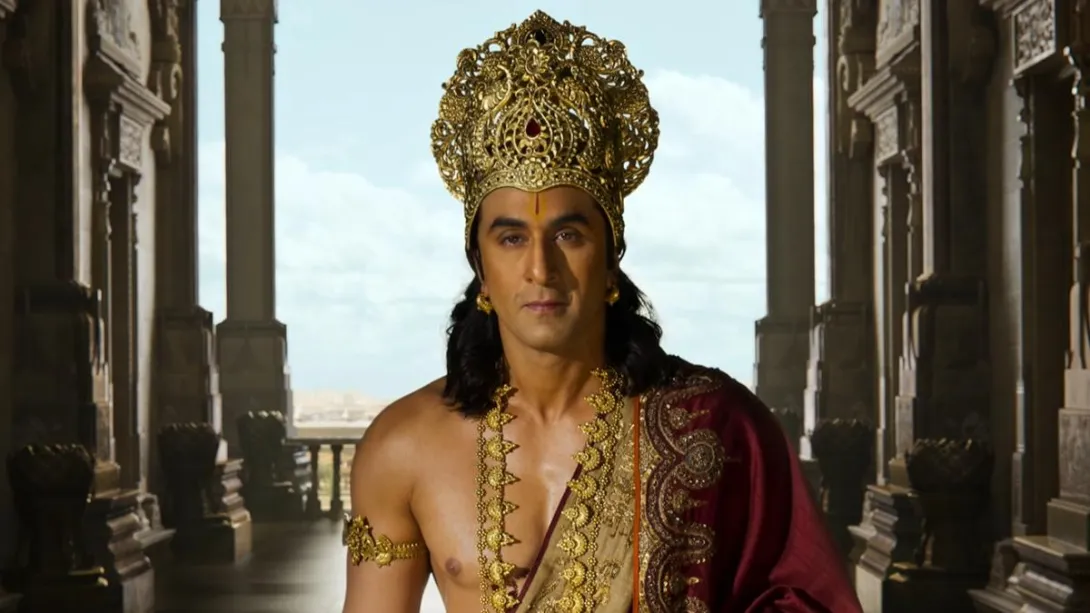
The highly anticipated film “Ramayana” has unveiled its first official look, offering audiences a glimpse of actor Ranbir Kapoor portraying Lord Rama in what is shaping up to be one of the most ambitious mythological projects in Indian cinema. Directed by Nitesh Tiwari, the film aims to reinterpret the ancient Indian epic for a modern global audience through high-end visual effects and a large-scale cinematic narrative. The first look has generated significant excitement across social media and the film industry, signaling the beginning of a major cultural and commercial event in Bollywood’s evolving mythological genre.
A Grand Return of Mythology to the Big Screen
Ramayana is emerging as one of the most closely watched film projects in India. Inspired by the ancient epic Ramayana traditionally attributed to Valmiki, the production seeks to present a visually immersive retelling of the timeless story of duty, virtue and heroism.
The newly released first look introduces Ranbir Kapoor in the role of Lord Rama, a character revered across South and Southeast Asia. The visual preview hints at an epic scale, blending traditional iconography with contemporary cinematic technology. Industry observers note that mythological storytelling—once a cornerstone of Indian cinema—is experiencing a revival, fueled by advances in visual effects and a growing global appetite for culturally rooted narratives.
Ranbir Kapoor Steps Into a Sacred Role
Casting Ranbir Kapoor as Rama marks a significant milestone in the actor’s career. Known for his performances in contemporary dramas and commercial blockbusters, Kapoor now enters the mythological genre—an arena that demands both emotional depth and cultural sensitivity.
Portraying Rama carries unique expectations. The character represents moral integrity, leadership and sacrifice, making the role one of the most revered in Indian storytelling traditions. Film analysts suggest Kapoor’s casting reflects the production’s ambition to balance star power with a faithful representation of the epic’s spiritual and philosophical dimensions.
Early reactions from fans indicate widespread curiosity about how the actor will interpret the legendary figure, particularly within a large-scale cinematic framework.
Director Nitesh Tiwari’s Vision for a Global Epic
Director Nitesh Tiwari, widely respected for crafting emotionally resonant narratives, is spearheading the project with the aim of transforming the epic into a modern cinematic spectacle. Industry insiders describe the film as a multi-part saga designed to match international blockbuster standards in production design, storytelling and visual effects.
Tiwari’s approach reportedly emphasizes authenticity in costumes, historical aesthetics and narrative fidelity while leveraging cutting-edge technology to bring the mythological world to life. The project is expected to feature elaborate set pieces, digital environments and large-scale battle sequences that could redefine the scope of mythological filmmaking in India.
The Business Stakes Behind the Production
Beyond its cultural significance, the film represents a major financial undertaking for the Indian entertainment industry. High-budget mythological productions have increasingly become strategic investments, capable of generating revenue across theatrical releases, digital streaming platforms and international markets.
If executed successfully, “Ramayana” could join the ranks of large-scale Indian cinematic franchises that combine cultural storytelling with global distribution potential. For producers and investors, such projects offer opportunities to expand India’s presence in the global entertainment economy while capitalizing on domestic audience enthusiasm for epic narratives.
Cultural Legacy Meets Modern Cinema
The story of Rama, Sita and Ravana has shaped literature, theatre and religious traditions for centuries. Translating that legacy into contemporary cinema requires a delicate balance between reverence and innovation.
The first look suggests that filmmakers are attempting precisely that—honoring the spiritual resonance of the epic while presenting it through the lens of modern filmmaking.
As anticipation builds, audiences and industry observers alike will be watching closely to see whether the film can meet the enormous expectations attached to one of the most sacred narratives in Indian culture.
- Log in to post comments