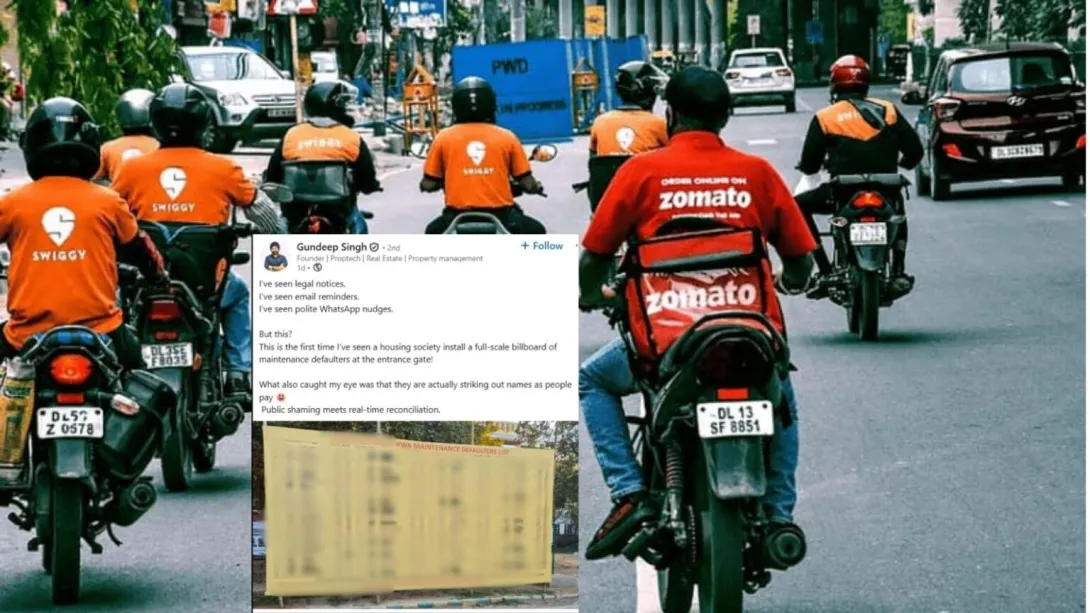
India’s online food delivery sector is witnessing heightened competition as Swiggy and Zomato strengthen their presence in Gurgaon, one of the country’s fastest-growing urban business hubs. Both companies are expanding restaurant partnerships, delivery networks and technology platforms to capture rising demand from the city’s large professional workforce. Analysts say Gurgaon’s affluent consumer base and thriving startup ecosystem make it a strategic market for digital food services. The intensifying rivalry highlights broader trends in India’s on-demand economy, where companies compete through logistics efficiency, customer experience and pricing strategies to secure long-term market dominance.
Gurgaon Emerges as a Key Market for Food Delivery Platforms
The rapid urban growth of Gurgaon has made the city a focal point for India’s digital food delivery industry. Home to multinational corporations, technology startups and a large population of young professionals, the city offers a lucrative customer base for on-demand services.
Both Swiggy and Zomato have increased operational investments in the region by expanding restaurant partnerships and strengthening their last-mile delivery networks.
Industry observers note that Gurgaon’s dense cluster of residential complexes, office districts and commercial hubs creates a favorable environment for high-frequency food delivery orders.
Strategic Expansion and Logistics Investments
To maintain competitive advantage, both companies are investing heavily in logistics technology and operational infrastructure. These investments include optimizing delivery routes, expanding cloud kitchen partnerships and improving app-based customer interfaces.
Logistics efficiency remains a critical differentiator in the food delivery sector. Faster delivery times, improved order accuracy and consistent service quality can significantly influence customer retention.
Market analysts say the intense rivalry between Swiggy and Zomato has accelerated innovation in the industry, pushing companies to refine operational models and enhance customer experience.
Consumer Demand Driven by Urban Lifestyle
The demand for online food delivery in Gurgaon reflects broader shifts in urban consumption patterns. Busy work schedules, rising disposable incomes and increasing smartphone penetration have fueled the adoption of digital ordering platforms.
Young professionals and dual-income households are particularly active users of such services, often relying on them for daily meals as well as social gatherings.
Economists suggest that the expansion of the gig economy and digital payments ecosystem has also contributed to the rapid growth of India’s food delivery market.
Competitive Pricing and Market Strategy
Competition between Swiggy and Zomato frequently manifests through promotional offers, subscription programs and loyalty incentives aimed at attracting repeat customers.
Both platforms have introduced membership plans that provide benefits such as discounted delivery fees and exclusive deals with partner restaurants.
Financial analysts say these strategies reflect a broader push to increase customer lifetime value while maintaining strong order volumes in competitive urban markets.
Implications for India’s Digital Commerce Sector
The evolving competition in Gurgaon underscores the strategic importance of India’s metropolitan regions in shaping the future of digital commerce.
For investors and industry observers, the rivalry between Swiggy and Zomato represents more than a contest for market share; it illustrates the rapid transformation of India’s consumer economy through technology-driven services.
As urban populations continue to expand and digital adoption accelerates, analysts expect food delivery platforms to play an increasingly significant role in the country’s broader e-commerce ecosystem.
Comments