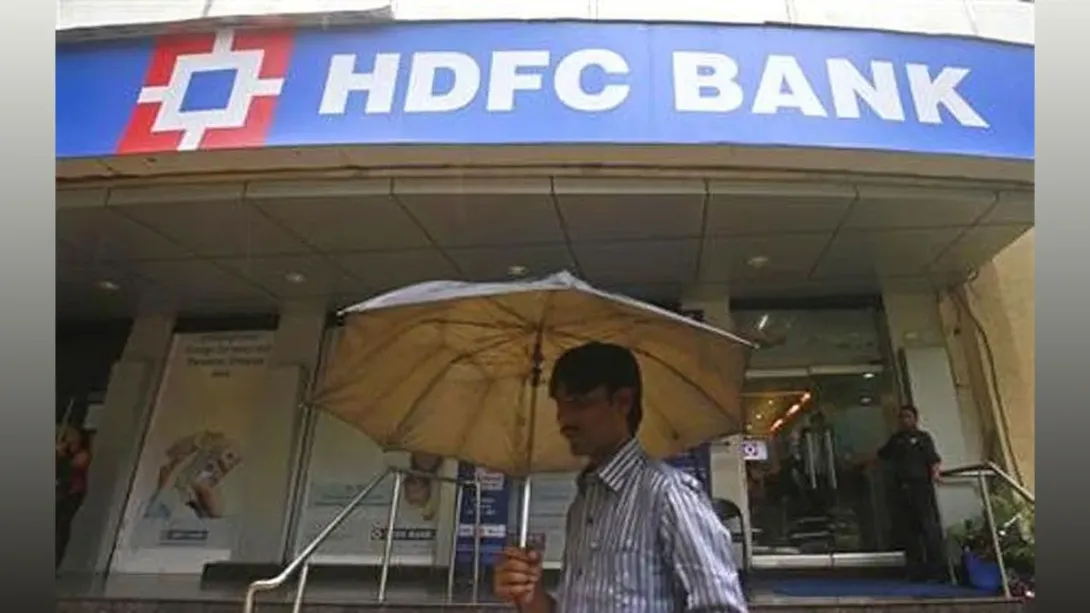
Shares of HDFC Bank experienced a noticeable decline following the resignation of the bank’s chairman, a development that unsettled investors and triggered short-term volatility in the financial sector. Market participants reacted cautiously as leadership transitions within major banking institutions often raise questions about strategic continuity and corporate governance. Although the bank remains fundamentally strong, analysts note that leadership changes in high-profile financial institutions can temporarily affect investor sentiment. The episode highlights the close relationship between corporate leadership stability and market performance in India’s banking sector, where investor confidence plays a central role in maintaining valuation strength.
Sudden Leadership Change Sparks Market Reaction
The unexpected resignation of the chairman at HDFC Bank prompted an immediate response from equity markets, with the bank’s shares declining during the latest trading session. Investors often view leadership changes in major financial institutions with caution, particularly when such transitions occur without extensive prior signaling.
In the banking industry, leadership stability is closely tied to strategic direction, regulatory compliance, and investor confidence. As a result, even a routine executive transition can influence short-term market sentiment.
The decline in share price reflects investors’ desire for clarity regarding the bank’s future leadership structure and long-term strategy.
Importance of Leadership Stability in Banking
Leadership continuity plays a crucial role in maintaining confidence among shareholders, regulators, and depositors. Large financial institutions such as HDFC Bank manage complex operations involving credit growth, risk management, and capital allocation.
When senior leadership changes unexpectedly, investors often reassess their expectations regarding governance practices and strategic priorities. While strong institutions generally adapt quickly to such transitions, short-term uncertainty can still influence market valuations.
Analysts emphasize that the quality of succession planning and transparency in communication are critical in managing investor reactions during leadership shifts.
Investor Sentiment and Share Price Volatility
Following the announcement of the chairman’s resignation, trading activity in HDFC Bank shares increased as investors adjusted their portfolios. Market volatility often accompanies major corporate announcements, particularly in the banking sector where institutional investors hold significant stakes.
Short-term declines do not necessarily reflect fundamental weakness. Instead, they frequently indicate a temporary recalibration of investor expectations until further information about the new leadership framework becomes available.
In many cases, share prices stabilize once markets gain confidence in the institution’s management transition plan.
HDFC Bank’s Position in India’s Financial Sector
Despite the recent decline in share price, HDFC Bank remains one of India’s most influential financial institutions. Over the years, the bank has built a reputation for strong asset quality, disciplined lending practices, and consistent growth.
Its extensive retail and corporate banking operations have allowed it to maintain a dominant position within India’s private banking sector. The bank also plays a key role in financing businesses, supporting consumer credit expansion, and driving digital banking innovation.
Such structural strengths provide a solid foundation for navigating temporary market turbulence.
Broader Implications for the Banking Industry
Leadership transitions at prominent institutions often draw attention across the broader financial sector. Investors monitor such developments closely because they can signal shifts in governance standards, regulatory relationships, or strategic priorities.
In India’s banking ecosystem, where competition among private lenders is intense, market perception remains a powerful force influencing capital flows. Maintaining transparency during leadership transitions therefore becomes essential for preserving investor trust.
Industry observers expect regulatory authorities and the bank’s board to ensure a smooth and credible succession process.
Outlook: Stability Likely to Return
Financial analysts generally believe that the decline in HDFC Bank shares may prove temporary if the institution communicates a clear succession strategy and reinforces its long-term growth roadmap.
Investors will closely watch announcements regarding the appointment of new leadership and any accompanying strategic initiatives. A smooth transition could quickly restore confidence in the bank’s governance framework.
For now, the episode serves as a reminder that in modern financial markets, leadership decisions can influence not only corporate direction but also the immediate perception of value among investors.
- Log in to post comments