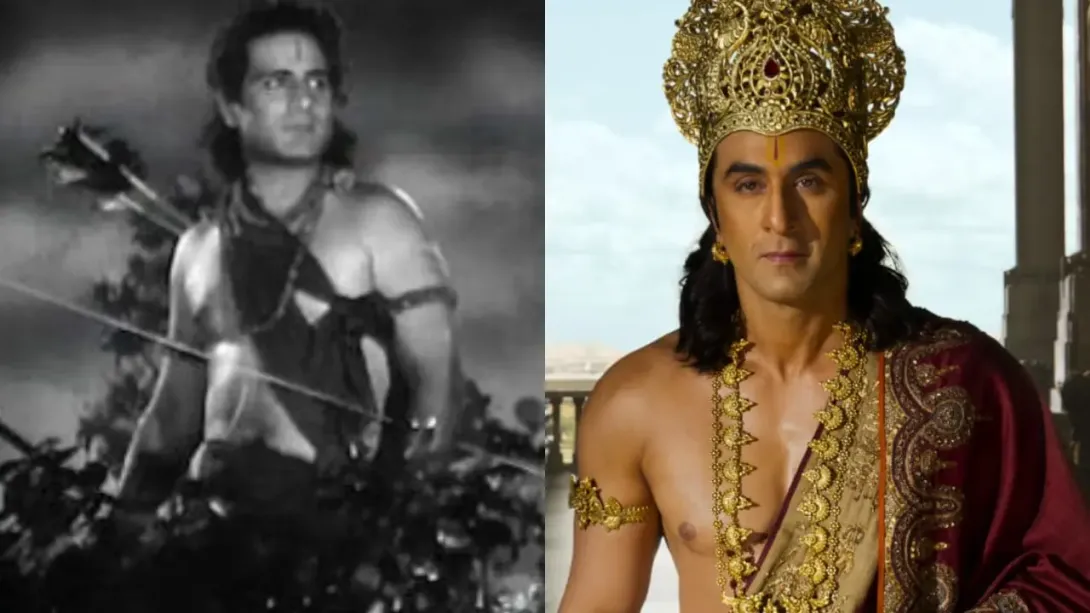
The release of the teaser for Ramayana, starring Ranbir Kapoor, has generated significant buzz across the entertainment and business landscape. Positioned as a large-scale cinematic adaptation of one of India’s most revered epics, the project reflects the industry’s growing appetite for high-investment, franchise-driven storytelling. The teaser not only highlights visual ambition but also signals the increasing convergence of mythology, technology, and global market strategy. As anticipation builds, Ramayana is shaping up to be a defining moment in India’s evolving film economy.
A High-Stakes Cinematic Venture
The unveiling of the Ramayana teaser marks the formal introduction of one of the most ambitious film projects in recent Indian cinema. Backed by substantial investment and a high-profile cast led by Ranbir Kapoor, the film aims to reimagine a culturally significant narrative through a contemporary cinematic lens.
Such projects represent a shift toward large-scale productions designed to compete not only domestically but also in global markets.
Mythology as Intellectual Property
Indian mythology has long served as a rich source of storytelling, but recent years have seen its transformation into valuable intellectual property. Films like Ramayana are increasingly being conceptualized as franchises, with potential extensions into sequels, streaming content, and merchandising.
This approach mirrors global entertainment strategies, where iconic narratives are leveraged to create multi-platform revenue streams. The teaser suggests a deliberate effort to position Ramayana within this framework.
Visual Scale and Technological Investment
The teaser indicates a strong emphasis on visual effects and production design, reflecting significant capital deployment. Advances in CGI and virtual production technologies are enabling filmmakers to recreate epic narratives with unprecedented scale and realism.
Such investments, while increasing upfront costs, are critical for attracting global audiences and competing with international productions. The success of these technologies will play a key role in determining the film’s commercial trajectory.
Star Power and Market Positioning
Ranbir Kapoor’s involvement adds considerable commercial weight to the project. As one of India’s leading actors, his presence enhances the film’s marketability across multiple demographics.
Star-driven projects often benefit from strong opening revenues, but sustained success depends on content quality and audience reception. In this context, the teaser serves as both a promotional tool and a signal of intent to investors and audiences alike.
Financial Implications and Industry Impact
Large-scale productions like Ramayana are reshaping the financial architecture of Indian cinema. High budgets necessitate diversified revenue streams, including theatrical releases, digital rights, satellite deals, and international distribution.
If successful, the film could set new benchmarks for returns on investment and encourage further capital inflow into the industry. It may also accelerate the trend toward franchise-building in Indian cinema.
Audience Expectations and Cultural Sensitivity
Adapting a text as culturally significant as the Ramayana requires careful navigation of audience expectations. While the teaser has generated excitement, it also places the film under intense scrutiny.
Balancing creative interpretation with cultural authenticity will be crucial in ensuring both critical and commercial success.
Conclusion
The teaser for Ramayana represents more than just a promotional milestone—it signals a broader transformation within Indian cinema. By combining mythology, technology, and strategic investment, the film embodies the industry’s ambitions to scale globally. As anticipation builds, its eventual performance will offer valuable insights into the future of high-budget storytelling in India, where cultural narratives and commercial imperatives increasingly intersect.
- Log in to post comments