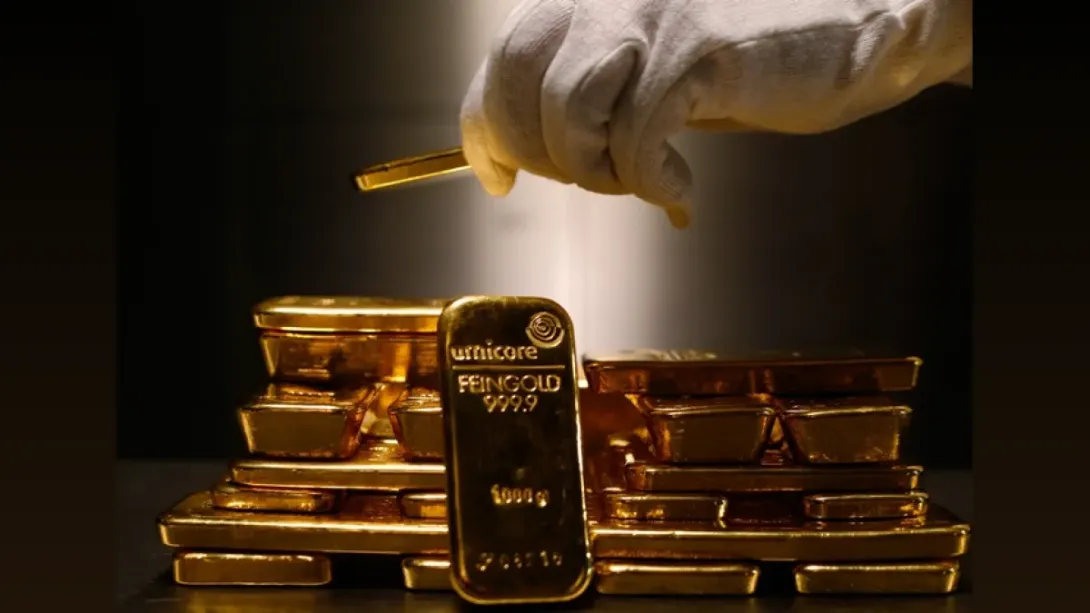
Gold prices began the week under pressure as futures declined sharply in domestic commodity markets. The price of gold futures dropped by Rs.2,225, or 1.4%, settling near Rs.1.56 lakh per 10 grams in early trading. The decline was primarily driven by bearish sentiment in global markets, a strengthening US dollar, and rising energy prices that have intensified speculation that the US Federal Reserve may delay interest rate cuts.
Analysts suggest that currency movements and monetary policy expectations remain key factors influencing bullion markets. Despite the short-term dip, gold continues to hold strategic importance for investors seeking stability amid global economic uncertainty.
Gold Futures Begin Week on a Lower Note
Gold prices witnessed a notable decline at the start of the trading week, reflecting cautious sentiment across international commodity markets. In the futures segment, gold contracts for April delivery fell by Rs.2,225, representing a 1.4% drop, with prices settling at approximately Rs.1,56,241 per 10 grams.
Trading activity on the Multi Commodity Exchange (MCX) remained active, with a business turnover of 7,881 lots, indicating sustained participation from market participants despite the price correction.
The decline highlights the sensitivity of bullion markets to global economic signals, particularly currency fluctuations and shifts in monetary policy expectations.
Strong US Dollar Pressures Bullion Prices
A key factor behind the fall in gold prices has been the strengthening of the US dollar. As the dollar appreciates against other major currencies, commodities priced in dollars—including gold—typically become more expensive for international buyers. This dynamic often leads to reduced demand and downward pressure on prices.
The stronger dollar environment has been reinforced by rising global energy prices and continued resilience in the US economy. These developments have strengthened the currency while simultaneously dampening investor appetite for precious metals in the short term.
For many investors, gold serves as a hedge against currency volatility and inflation. However, when the dollar gains strength, the attractiveness of holding gold can temporarily diminish.
Interest Rate Expectations Influence Market Sentiment
Another critical driver of the recent price movement is growing speculation about the future path of US monetary policy. Rising energy prices have renewed concerns that inflation may remain persistent, potentially prompting the US Federal Reserve to delay anticipated interest rate cuts.
Higher interest rates typically reduce the appeal of non-yielding assets such as gold because investors may prefer instruments that offer fixed returns, such as bonds. Consequently, even the expectation of prolonged higher rates can trigger short-term selling pressure in bullion markets.
Market analysts note that the trajectory of US inflation and central bank policy decisions will remain crucial in shaping the direction of gold prices over the coming months.
Market Participation Remains Steady
Despite the price decline, trading volumes in the futures market indicate sustained engagement from traders and investors. The recorded turnover of 7,881 lots suggests that market participants are actively adjusting their positions in response to evolving global conditions.
Commodity traders often use futures contracts to hedge against price volatility or to capitalize on short-term movements. As such, fluctuations in the futures market can reflect both speculative activity and risk management strategies among institutional and retail participants.
Broader Outlook for the Gold Market
While gold prices have experienced a temporary correction, long-term demand for the metal remains supported by several structural factors. These include geopolitical uncertainties, inflation concerns, and central bank purchases of gold reserves.
Historically, gold has served as a safe-haven asset during periods of economic volatility. Even when short-term pressures arise from currency strength or monetary policy expectations, the metal often regains momentum when global uncertainty increases.
Analysts therefore emphasize that short-term price fluctuations should be viewed within the broader context of global macroeconomic trends and investor risk sentiment.
Conclusion
The decline in gold futures to around Rs.1.56 lakh per 10 grams reflects the combined impact of a strengthening US dollar, rising energy prices, and growing uncertainty about the timing of interest rate cuts by the US Federal Reserve. While these factors have triggered short-term selling pressure in the bullion market, gold continues to maintain its strategic importance within diversified investment portfolios.
As global economic conditions evolve, the interplay between currency movements, inflation trends, and central bank policies will remain central to determining the future trajectory of gold prices.
- Log in to post comments