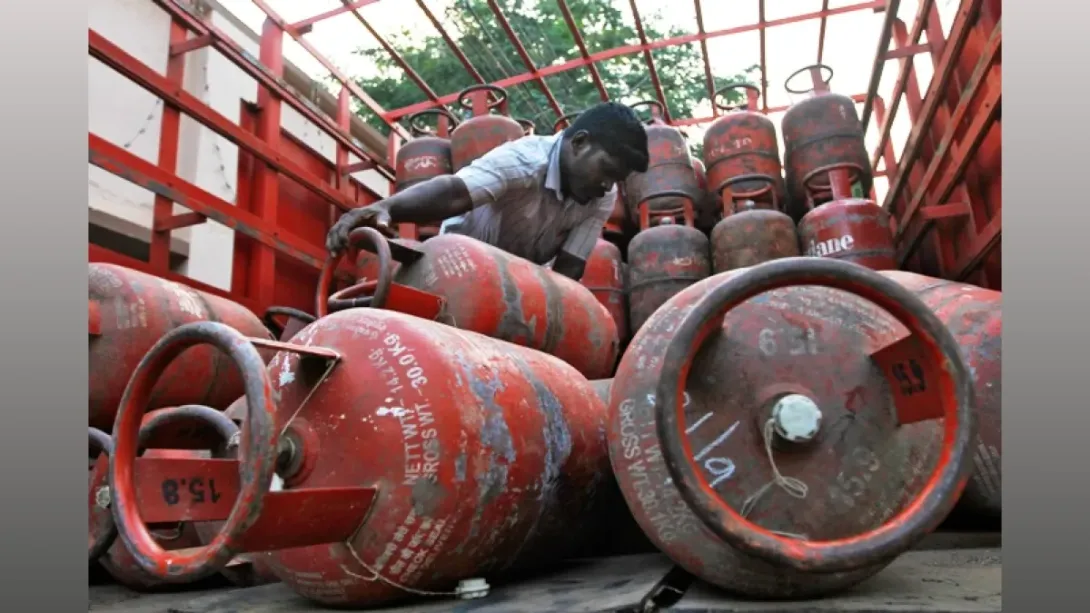
India’s liquefied petroleum gas (LPG) refill bookings have declined to around 77 lakh from an earlier 88.8 lakh, signaling a gradual easing of precautionary buying among consumers. Authorities have reiterated that the country faces no shortage of petrol, diesel, or cooking gas, even as geopolitical tensions in West Asia continue to influence global energy markets. Domestic refineries are operating at high capacity and maintaining sufficient crude oil reserves to ensure uninterrupted supply.
Meanwhile, a nationwide campaign encouraging digital transactions has pushed the share of online LPG bookings to 87 percent. The developments highlight both improved consumer confidence and the resilience of India’s energy supply chain.
LPG Refill Bookings Show Signs of Stabilization
Recent data indicates a notable decline in LPG refill bookings across India, with daily requests falling to approximately 77 lakh from an earlier level of 88.8 lakh. The drop suggests that earlier spikes in demand were largely driven by precautionary buying rather than sustained consumption growth.
Consumer anxiety had briefly intensified following geopolitical tensions in West Asia, a region central to global energy supply routes. However, the recent moderation in booking volumes reflects a gradual return to normal purchasing patterns as authorities continue to reassure the public about fuel availability.
Market observers note that such fluctuations in booking volumes are common during periods of global uncertainty, particularly when energy security becomes a prominent public concern.
Government Reassures Citizens on Fuel Availability
Officials have emphasized that India’s fuel distribution network remains stable and well-equipped to meet domestic demand. According to the latest government updates, there is no shortage of petrol, diesel, or cooking gas anywhere in the country.
Authorities have stressed that the nation’s energy infrastructure—including refining capacity, supply logistics, and distribution networks—continues to operate smoothly despite global market volatility.
The government’s communication strategy aims to prevent panic buying and maintain public confidence in the reliability of fuel supplies. By providing regular updates on inventory levels and production capacity, policymakers seek to reassure households and businesses alike.
Digital LPG Booking Adoption Accelerates
Alongside the decline in total bookings, there has been a noticeable increase in the proportion of LPG refills requested through digital channels. Online bookings now account for approximately 87 percent of total requests, up from about 84 percent earlier.
Industry officials attribute this growth to awareness campaigns launched by oil marketing companies. These initiatives encourage consumers to use mobile applications, online portals, and automated systems to schedule refills rather than visiting physical dealerships.
The shift toward digital booking offers several operational benefits. It helps reduce queues at distribution centers, improves delivery scheduling efficiency, and strengthens transparency in the LPG supply chain.
Refineries Operating at High Capacity
India’s domestic refining sector remains a cornerstone of the country’s energy security framework. Officials confirmed that refineries nationwide are currently functioning at elevated operational levels.
In addition to maintaining high throughput rates, these facilities are also holding adequate crude oil inventories. Such inventory management plays a critical role in ensuring continuity of fuel production even during periods of global supply disruptions.
The ability to maintain consistent refining activity allows the country to sustain stable production of essential petroleum products, including petrol, diesel, and LPG.
Strong Domestic Capacity Supports Energy Security
Another key factor supporting supply stability is India’s robust refining capacity. Authorities have highlighted that the country remains largely self-sufficient in the production of petrol and diesel.
Domestic refineries are capable of meeting national demand without relying on additional imports of these fuels. This self-sufficiency provides a strategic buffer against potential disruptions in international supply chains or fluctuations in global energy prices.
Such resilience has become increasingly important as global energy markets respond to geopolitical developments and shifting trade dynamics.
Geopolitical Factors and Market Sensitivity
Energy markets worldwide remain sensitive to developments in West Asia, a region that plays a crucial role in global oil production and shipping routes. Even minor geopolitical tensions can trigger volatility in crude oil prices and influence supply expectations.
Despite these uncertainties, India’s diversified energy procurement strategy and strong refining ecosystem have helped mitigate potential risks. The government’s proactive communication and operational preparedness have also played an important role in maintaining stability in domestic fuel markets.
Conclusion
The decline in LPG refill bookings from 88.8 lakh to around 77 lakh indicates that earlier precautionary demand is gradually subsiding. Government assurances regarding the availability of petrol, diesel, and cooking gas have helped stabilize consumer sentiment.
At the same time, the increasing adoption of digital booking platforms demonstrates the success of initiatives aimed at modernizing the country’s energy distribution systems. Combined with strong refining capacity and adequate crude oil reserves, these developments reinforce India’s ability to maintain a reliable and resilient fuel supply chain even amid global geopolitical uncertainties.
- Log in to post comments