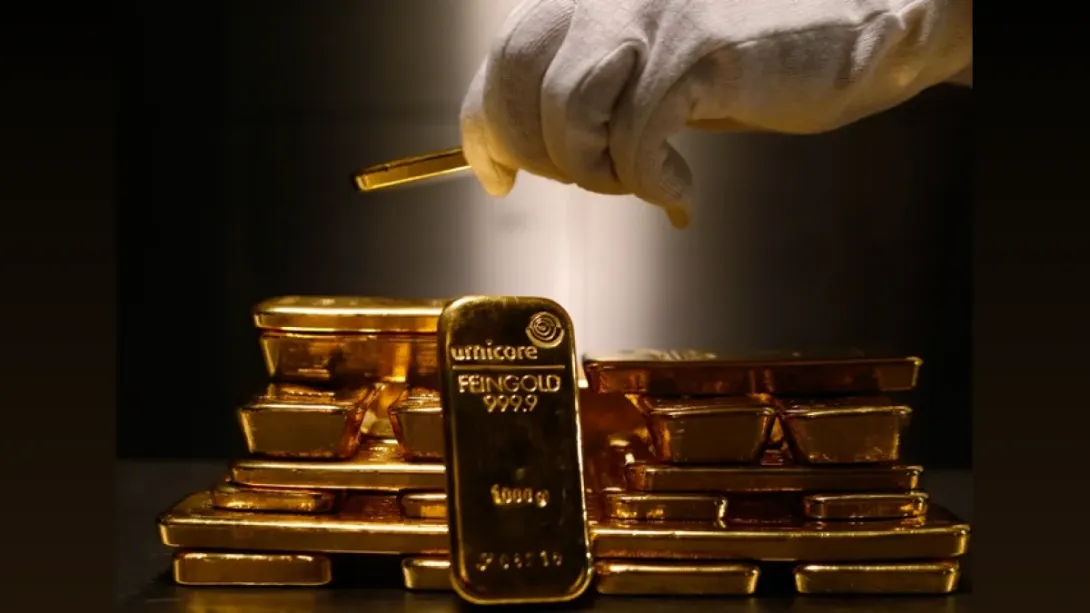
Gold prices began the week with a notable decline in the domestic futures market, reflecting bearish sentiment in global commodities and the strengthening of the US dollar. Gold futures dropped by Rs.2,225, or 1.4%, settling at around Rs.1,56,241 per 10 grams during Monday’s trading session. The correction was influenced by rising global energy prices and speculation that the US Federal Reserve may postpone anticipated interest rate cuts. These developments have strengthened the US currency and reduced investor appetite for bullion in the short term. Despite the decline, gold continues to remain a crucial hedge asset for investors navigating global economic volatility and inflationary pressures.
Gold Futures Open Week with Decline
Gold prices registered a sharp fall at the start of the trading week, reflecting cautious sentiment among investors and traders in the commodities market. In futures trading, gold contracts for April delivery fell by Rs.2,225, marking a 1.4% decline, with prices reaching Rs.1,56,241 per 10 grams.
The drop was recorded on the Multi Commodity Exchange (MCX), where market participation remained active despite the downward trend. The session witnessed a total business turnover of 7,881 lots, highlighting continued engagement from traders adjusting positions in response to evolving global market conditions.
Short-term fluctuations in bullion prices often mirror developments in global financial markets, particularly currency movements and changes in interest rate expectations.
Strong US Dollar Dampens Gold Demand
One of the primary drivers behind the decline in gold prices has been the strengthening of the US dollar. When the dollar appreciates against other major currencies, commodities priced in dollars become relatively more expensive for global investors, often leading to reduced demand.
The recent rise in energy prices has contributed to dollar strength, reinforcing investor confidence in the currency. As a result, gold—traditionally viewed as a safe-haven asset—has faced temporary selling pressure in the futures market.
Historically, gold tends to move inversely to the US dollar. When the currency strengthens, the appeal of gold as an alternative store of value may weaken, leading to short-term price corrections.
Interest Rate Outlook Shapes Investor Sentiment
Market expectations surrounding US monetary policy have also played a significant role in shaping bullion price movements. Rising energy costs have raised concerns that inflation could remain persistent, which in turn may prompt the US Federal Reserve to maintain higher interest rates for a longer period.
Higher interest rates typically reduce the attractiveness of gold because the metal does not generate interest or yield. Investors often shift their focus toward interest-bearing assets when borrowing costs rise or remain elevated.
Consequently, speculation that the Federal Reserve may delay interest rate reductions has weighed on gold prices, contributing to the recent decline in futures trading.
Active Trading Reflects Market Adjustment
Despite the downward movement in prices, trading volumes in the gold futures market indicate that investors remain actively engaged. The recorded turnover of 7,881 lots suggests that traders are repositioning their portfolios in response to global economic developments.
Commodity traders frequently use futures contracts to hedge against price volatility or to capitalize on short-term price fluctuations. As such, trading activity often increases during periods of uncertainty in the broader financial markets.
Broader Market Outlook
Although gold prices have faced short-term pressure, the metal continues to play a vital role in global investment portfolios. Investors often turn to gold during periods of economic instability, geopolitical tensions, or inflationary pressures.
The future trajectory of gold prices will likely depend on several factors, including movements in the US dollar, global energy prices, inflation trends, and central bank monetary policies. Any shift in expectations regarding interest rate cuts could significantly influence bullion markets in the coming months.
Conclusion
The decline in gold futures to approximately Rs.1.56 lakh per 10 grams reflects the combined impact of a stronger US dollar, rising energy costs, and uncertainty surrounding the timing of interest rate cuts by the US Federal Reserve. While these factors have triggered short-term weakness in bullion prices, gold remains a critical asset for investors seeking protection against economic volatility.
As global financial conditions continue to evolve, market participants will closely monitor currency trends, inflation data, and central bank policy signals to assess the future direction of gold prices.
- Log in to post comments