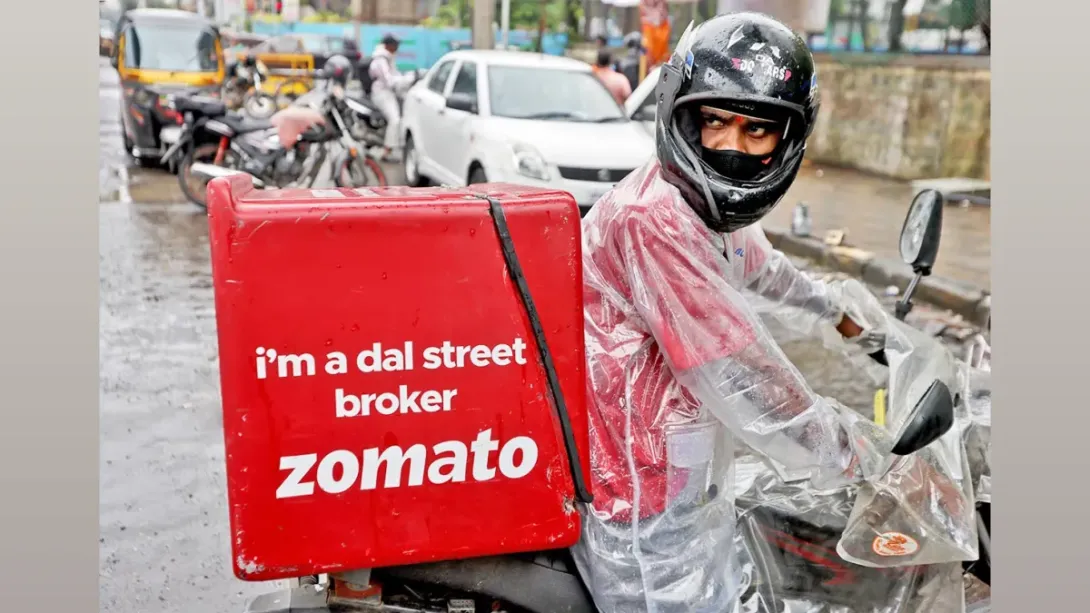
India’s food delivery and digital commerce landscape is witnessing a strategic divergence as Zomato has increased its platform fee for customers, while rival service magicpin has opted to maintain its existing pricing structure. The move reflects differing approaches to revenue generation in a highly competitive market where profitability and customer retention remain critical priorities. Analysts believe such pricing adjustments could influence consumer behavior and merchant relationships across the food delivery ecosystem. As digital platforms seek sustainable growth, pricing models are increasingly becoming a key factor shaping competition in India’s rapidly expanding online services industry.
Zomato Revises Platform Fee Structure
Online food delivery giant Zomato has implemented a revision in its platform fee, adding a slightly higher charge to customer orders placed through its application. Platform fees are typically applied as a service charge that helps companies cover operational costs, technology infrastructure, and logistics management.
For digital marketplaces operating at scale, even small adjustments in per-order fees can significantly impact overall revenue. With millions of transactions processed each month, incremental pricing changes can generate substantial financial gains.
The decision highlights Zomato’s continued efforts to strengthen its profitability in an industry that has historically operated on thin margins.
magicpin Chooses a Different Competitive Strategy
In contrast, competing platform magicpin has chosen to maintain its existing fee structure, positioning itself as a cost-conscious alternative for consumers and merchants.
By avoiding additional charges, the company may be attempting to attract price-sensitive customers who compare delivery costs across platforms before placing orders. Such strategies can help emerging players gain market share in a highly competitive digital ecosystem.
However, maintaining lower fees also requires companies to carefully manage operational costs and optimize logistics efficiency.
Economics of Food Delivery Platforms
The food delivery business involves complex cost structures, including rider payments, technology infrastructure, marketing expenses, and restaurant partnerships. Companies such as Zomato must balance growth with financial sustainability.
Over the past few years, many digital platforms have experimented with multiple revenue streams, including delivery charges, platform fees, advertising services for restaurants, and subscription programs.
Increasing the platform fee is one way to improve unit economics without significantly raising menu prices, which remain largely controlled by restaurant partners.
Impact on Consumers and Restaurants
For consumers, higher platform fees may slightly increase the final cost of ordering food online. While the difference per order may appear modest, frequent users of delivery services could notice the cumulative effect over time.
Restaurants also closely monitor such changes because higher customer costs can influence order volumes. Digital platforms must therefore strike a delicate balance between revenue growth and maintaining strong relationships with both diners and restaurant partners.
Companies like magicpin may attempt to capitalize on such adjustments by highlighting cost advantages in their marketing campaigns.
Competition Intensifies in India’s Food Delivery Market
India’s food delivery sector has evolved into a multi-billion-rupee digital marketplace, with intense competition among major technology-driven platforms.
Companies continually refine their strategies to attract customers through discounts, loyalty programs, faster delivery, and improved user experiences. Pricing strategies—such as adjusting platform fees—have become an increasingly important lever for sustaining profitability.
The contrasting approaches taken by Zomato and magicpin illustrate the diverse tactics companies are deploying to compete in the evolving digital commerce ecosystem.
Outlook: Profitability Versus Market Share
Industry analysts believe the long-term success of food delivery platforms will depend on their ability to achieve sustainable profitability while maintaining strong customer engagement.
If consumers accept the revised pricing structure introduced by Zomato, other companies in the sector may eventually consider similar adjustments. Conversely, platforms maintaining lower fees could attract price-sensitive users and expand their customer base.
As competition intensifies, pricing innovation, operational efficiency, and technological advancement will remain central to shaping the future of India’s online food delivery industry.
Comments